- +91-99141-56467
- info@deovateworld.in

Practical articles on web development, design, SEO, and digital strategy from our team.
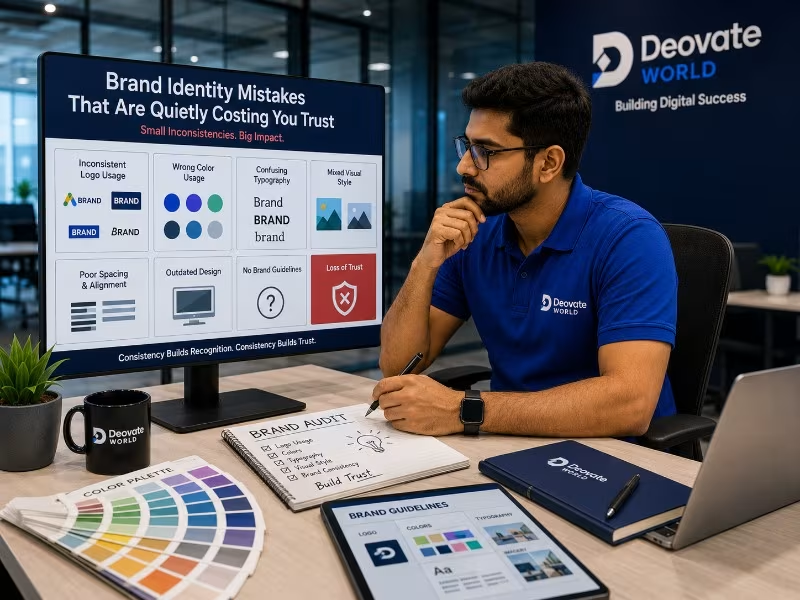
Most branding mistakes are not dramatic, they are small inconsistencies that quietly accum...
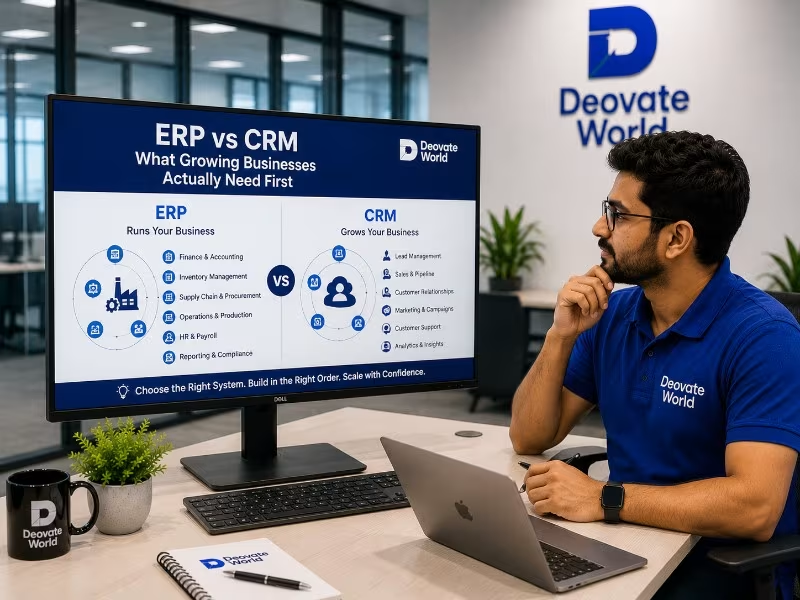
These two systems get confused constantly, and businesses often invest in the wrong one fi...
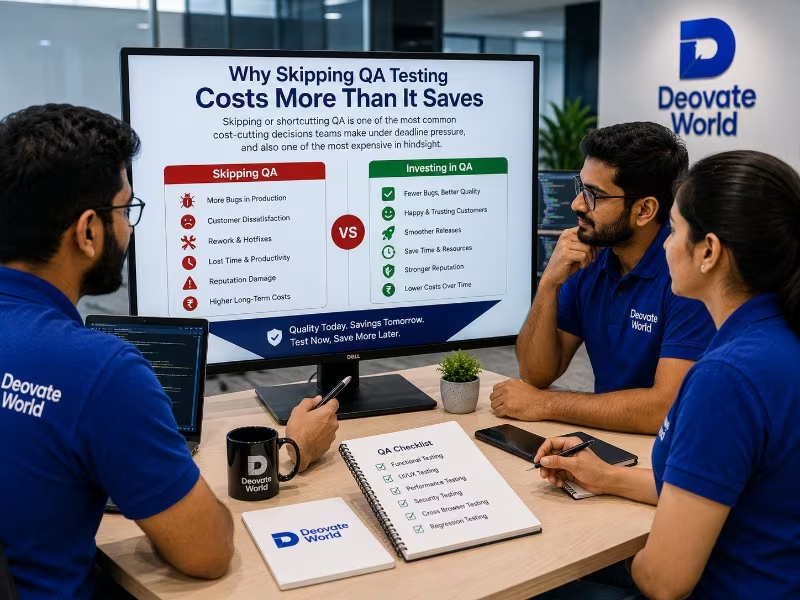
Skipping or shortcutting QA is one of the most common cost-cutting decisions teams make un...
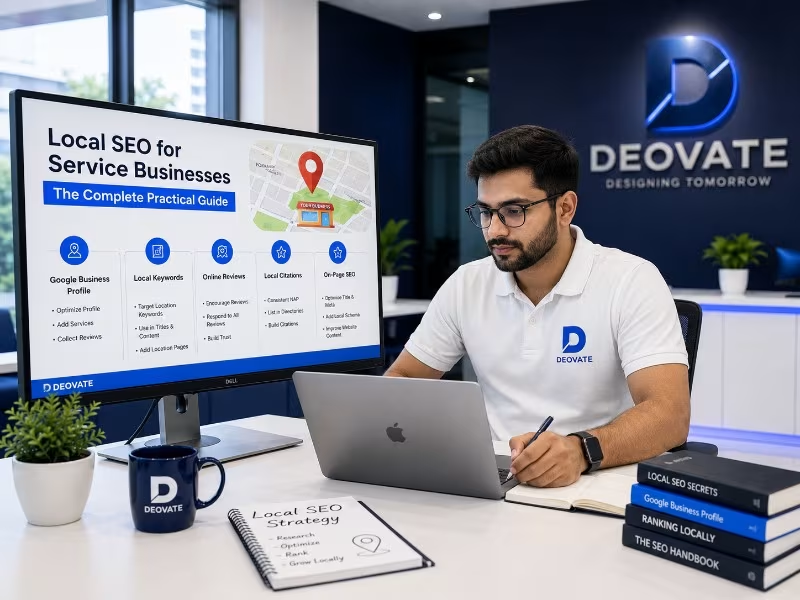
For businesses that serve a specific area, showing up in local search results often matter...
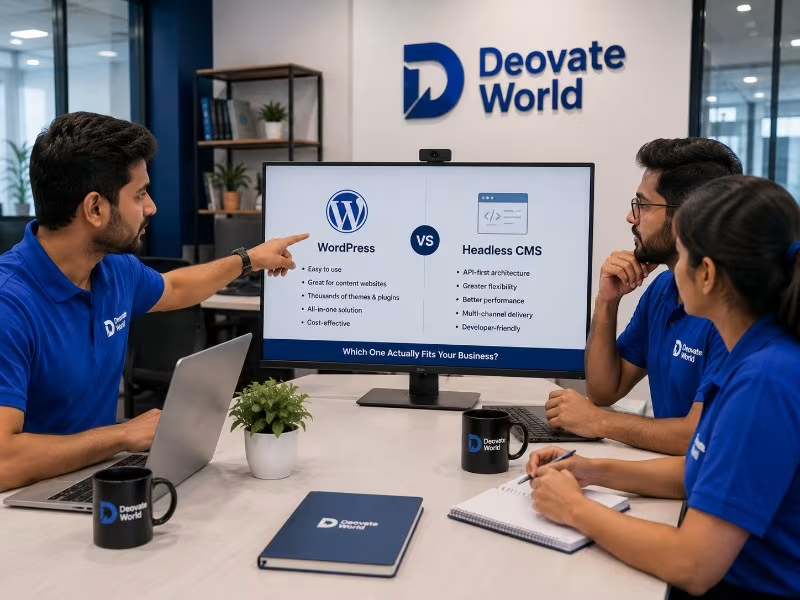
This comparison comes up constantly, and most explanations get too technical too fast. Her...
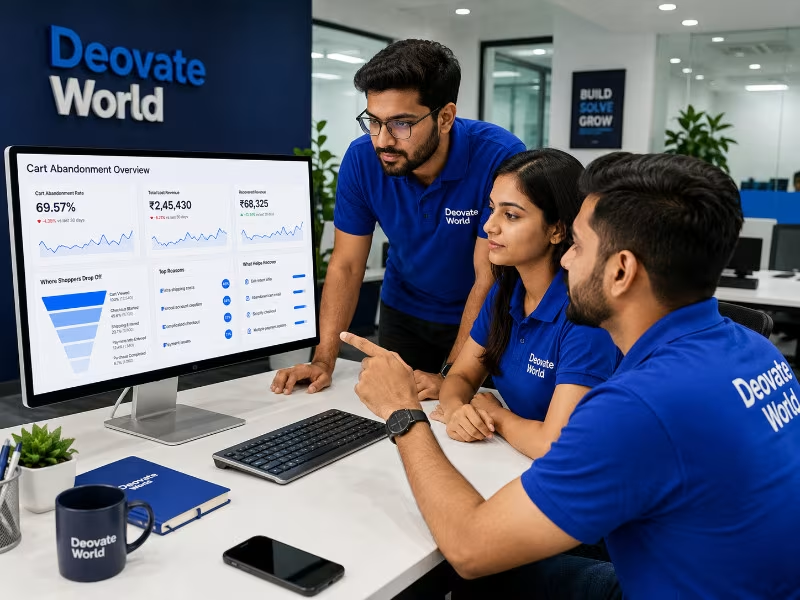
Cart abandonment is one of the most measurable, most ignored revenue leaks in eCommerce. H...
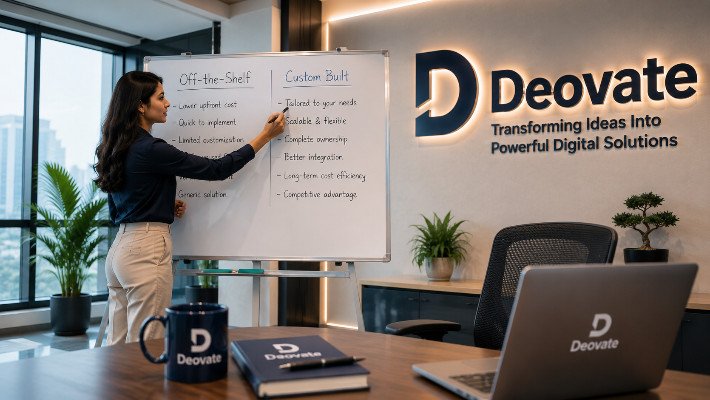
Almost every growing business hits this decision eventually. Here is a complete framework...

Most website owners never see their own site the way a stranger does. Here is the gap that...
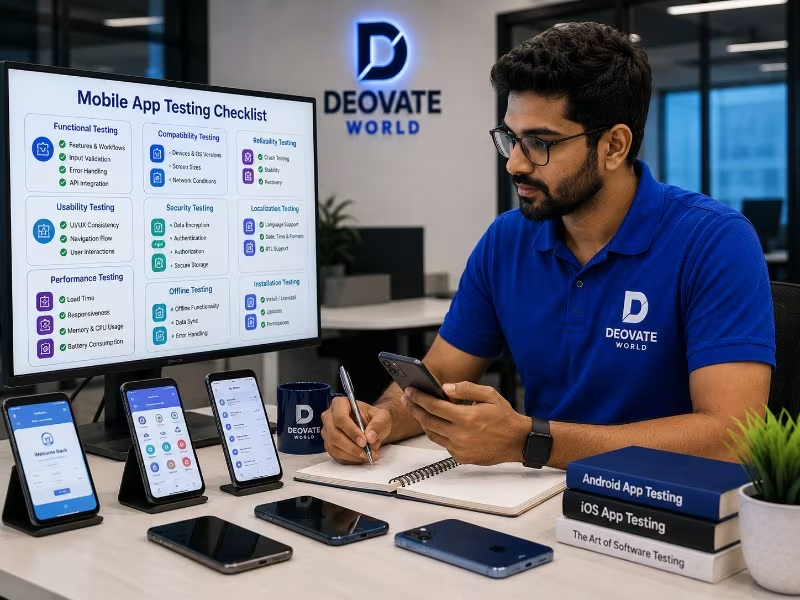
Most mobile app testing happens on one phone, the developer's own device, on office wi...
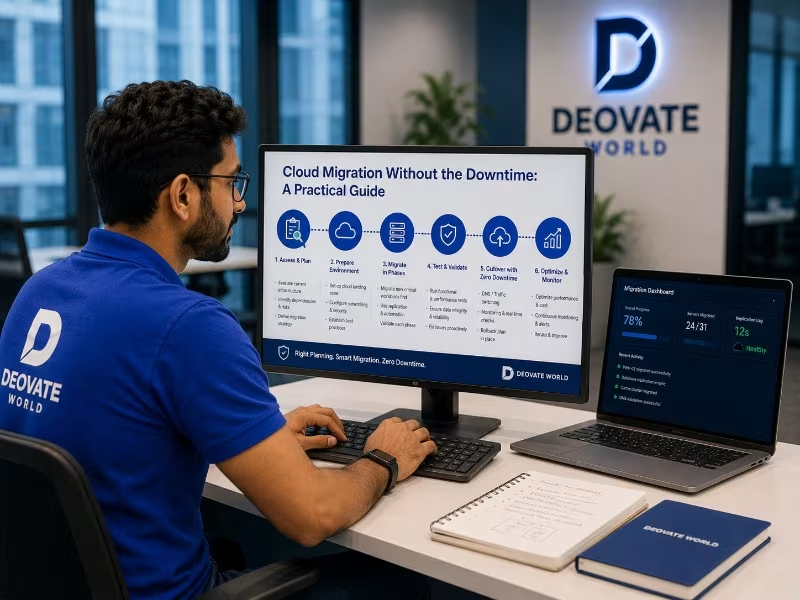
Cloud migration sounds simple in a pitch deck and becomes genuinely risky the moment it to...
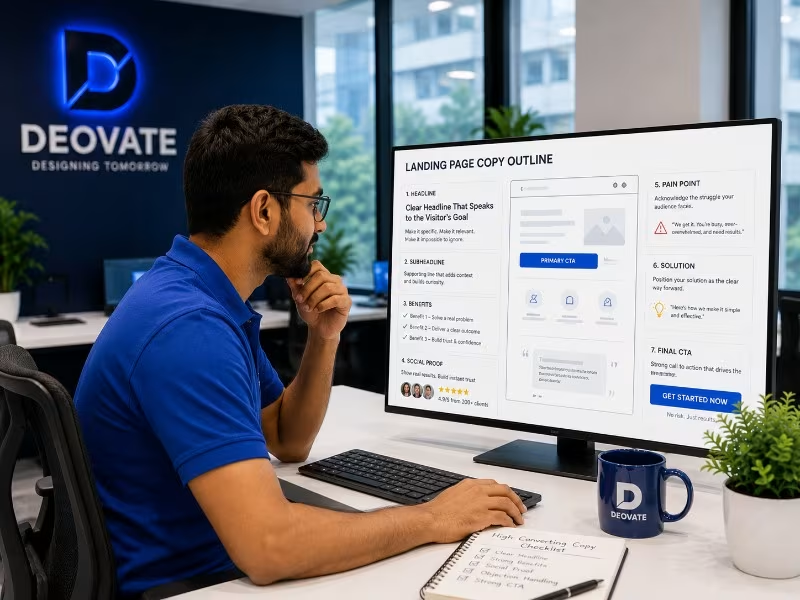
Most landing page copy is written to sound impressive rather than to actually move a speci...
Every project we take on moves through the same four stages, not because we lack flexibility, but because skipping steps is exactly how good ideas turn into messy builds. Here's what that looks like in practice.
Discover how our technology solutions have helped businesses innovate, grow, and achieve lasting success through trusted partnerships and measurable results.

I found Deovate through one of their blog posts about API integration failures, which described our exact situation at the time. That article is the reason I reached out at all.
Their cart abandonment article gave me two specific fixes I implemented myself before even hiring them, and both worked. That's when I decided to trust them with the bigger project.
Genuinely useful, practical content, not the generic listicles most agency blogs put out. I'd love to see more posts specifically on real estate CRM workflows given our industry.
The blog post on cloud migration downtime matched almost exactly what we were nervous about before our own migration. Reading it before our first call meant I already trusted their approach.
What I appreciate about their blog is that it's written by people who clearly did the actual work, not a content writer paraphrasing generic advice found elsewhere online.
Their SEO and AI search article changed how we approached our own content strategy months before we ever became a client. That's genuinely rare value from a company blog.
You've seen how we think and how we work. Here's where it turns into your project.
You've read about how we think, who leads the work, and what a project with us
actually looks like day to day. The next step is simple: tell us what you're building, and we'll tell
you honestly whether we're the right fit - and if we are, exactly what that plan looks like.
Still have a question after reading about our team and process? Here are the ones people ask most.
Quick answers to common questions
Mostly the stuff we deal with day to day inside real projects - web development practices, software architecture decisions, tech stack trade-offs, and the occasional post about a bug or design decision that taught us something. We're not chasing trending keywords just to have more pages indexed. If we publish something, it's usually because we hit a problem while building for a client, solved it, and thought it was worth writing down before we forgot the details ourselves. That means you'll see posts that are narrower and more technical than what most agency blogs put out. Over time, expect this to cover everything from front-end performance to backend architecture to the occasional "here's what we'd do differently" retrospective.
We publish when there's something worth saying, not on a rigid weekly quota just to keep a content calendar full. Some months you'll see a few posts back to back because we're deep in projects that surface interesting problems. Other stretches will be quieter because we're heads-down building rather than writing about building. We'd rather send you one genuinely useful post a month than five recycled ones just to hit a publishing streak. If consistency matters to you, subscribing or checking back periodically is more reliable than expecting a fixed schedule.
No, everything on the blog is free to read, and that's not changing. There's no "enter your email to unlock the rest of this article" trick waiting halfway down the page. We think gating basic educational content is a bad trade for a reader's trust, especially from a company that's asking you to trust it with a much bigger project later. If we ever build a downloadable resource, a template, or a deeper guide that requires an email, it'll be clearly separate from the regular blog posts, not disguised as one. The articles themselves stay open, indexed, and shareable without any hoops.
Yes, if there's a subscribe option live on the page, that's the simplest way to stay in the loop without checking back manually. We keep that list focused strictly on new posts, not a backdoor into a sales sequence, so signing up doesn't mean you'll suddenly get pitched every week. Following our social channels works as a backup if you'd rather not hand over an email address at all. Either way, we're not going to flood your inbox just because you subscribed once. The goal is to make it easy to catch things you'd actually find useful, not to build a marketing funnel out of the blog.
We're fairly selective about this, honestly. Most of what goes up is written internally because it comes directly out of work we've actually done, and that's hard to outsource convincingly. Occasionally we'll feature someone with genuine, specific expertise in a topic we haven't covered well ourselves, but that's the exception rather than the rule. We don't run an open submission form purely to collect backlinks or fill a content calendar with someone else's SEO piece. If you do have real, hands-on experience and think it fits what we cover, reach out and we'll take a look - just don't expect an automatic yes.
Our own team writes and reviews everything that goes on the blog, and in most cases that's literally the person who worked on the project being discussed. That's a deliberate choice, because a content writer describing a technical decision secondhand tends to flatten the nuance that actually matters. When someone on our team writes about a caching strategy or a migration headache, they're describing something they debugged at two in the morning, not something they read about. It makes the posts less polished in places, sure, but it also means the detail holds up if you actually try to apply it. We'd rather sound a little rougher and be right than sound smooth and be generic.
Sure, go ahead, as long as you link back to the original post and credit where it came from. What we're not okay with is someone copying a full article word for word and republishing it as their own content elsewhere - that's a different thing entirely and it undermines the reason we wrote it in the first place. Pulling a paragraph, referencing an idea, or linking to a specific section for your own readers is exactly the kind of use we're fine with. We wrote this content to be genuinely useful to people outside our own client base too, not to lock it away behind attribution rules nobody follows anyway. Just keep the link back intact and we're good.
Yes, and we'd genuinely rather hear from someone who wants a specific answer than guess at what to write about next. Send it over through our contact page with a bit of context on what you're trying to figure out or what prompted the question. If it's something we have real, hands-on experience with, there's a decent chance it turns into an actual post rather than sitting in a list somewhere. If it's outside what we've actually built or dealt with, we'll tell you honestly rather than publishing a shallow take just to check the box. Either way, reader suggestions tend to produce more useful posts than us picking topics in a vacuum.
It really depends on the post, and we try to make that clear early on so you're not several paragraphs in before realizing it doesn't apply to your setup. Some articles are deep, specific dives into a particular framework, database, or tool because that's what the underlying problem actually involved. Others are more about principles - how to think about scaling, how to structure a team's workflow, how to approach a migration - that hold up regardless of what you're building with. When a post is stack-specific, we'll usually say so in the first paragraph or the title itself. If you're ever unsure, the fastest way to check is just skimming the intro before committing to the rest.
Reach out through our contact page and mention which article prompted the question, since that context alone saves a lot of the usual back-and-forth. It tells us roughly where you are in the problem and what you've probably already tried, so we're not starting from zero on the first call. From there it's a normal conversation - what you're building, what's actually broken or missing, and whether it makes sense for us to help directly. Reading the blog doesn't commit you to anything, and we're not going to turn a simple question into a sales pitch. Sometimes the honest answer is a quick pointer in the right direction rather than a full engagement, and that's fine too.
We'd love to hear about your project