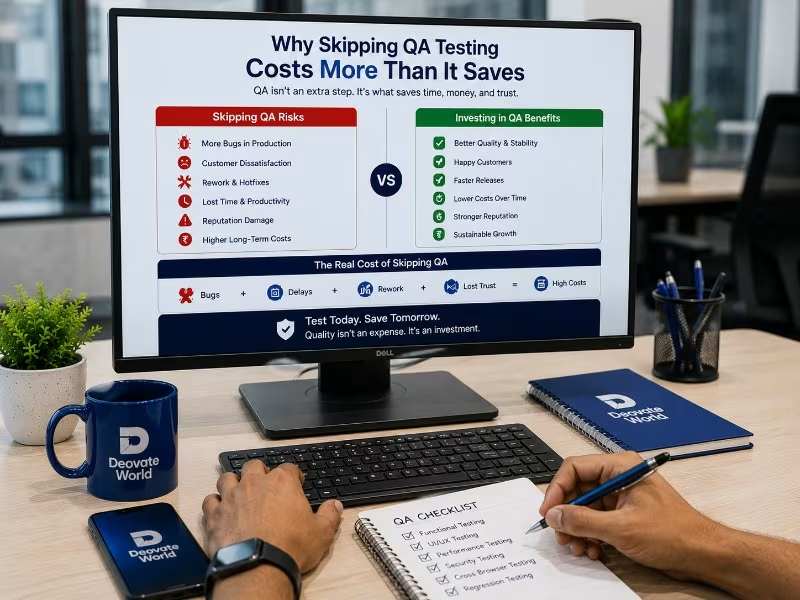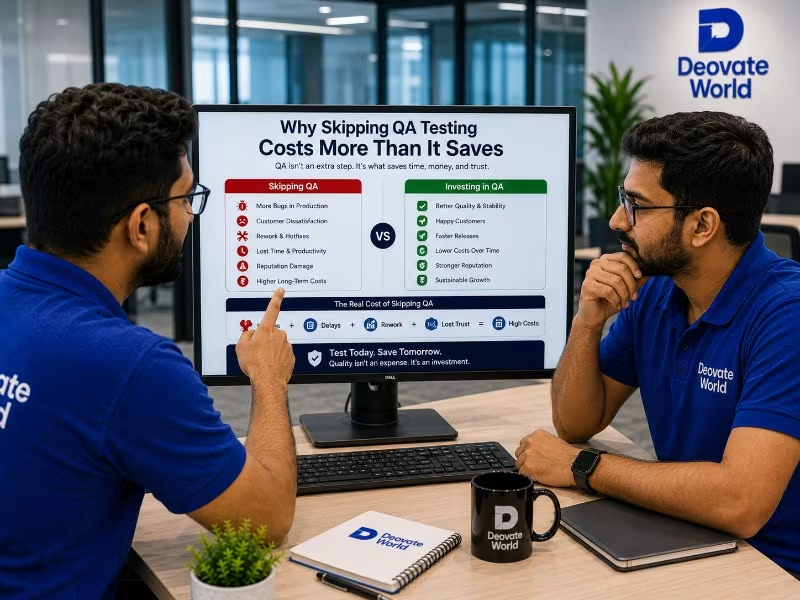
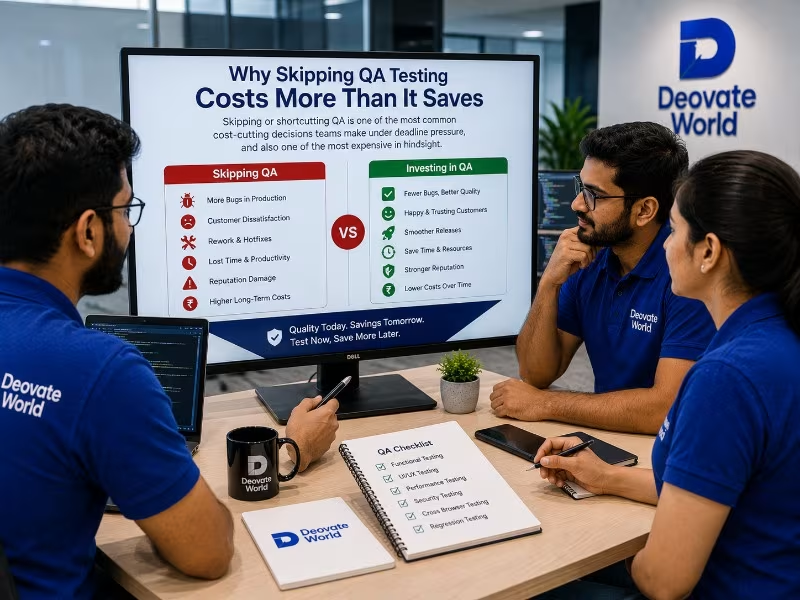

Why Skipping QA Testing Costs More Than It Saves
Deovate World

Why Skipping QA Testing Costs More Than It Saves

Mehul Jain Mehul Jain
Jul 14, 2026 5 min read 1460 views

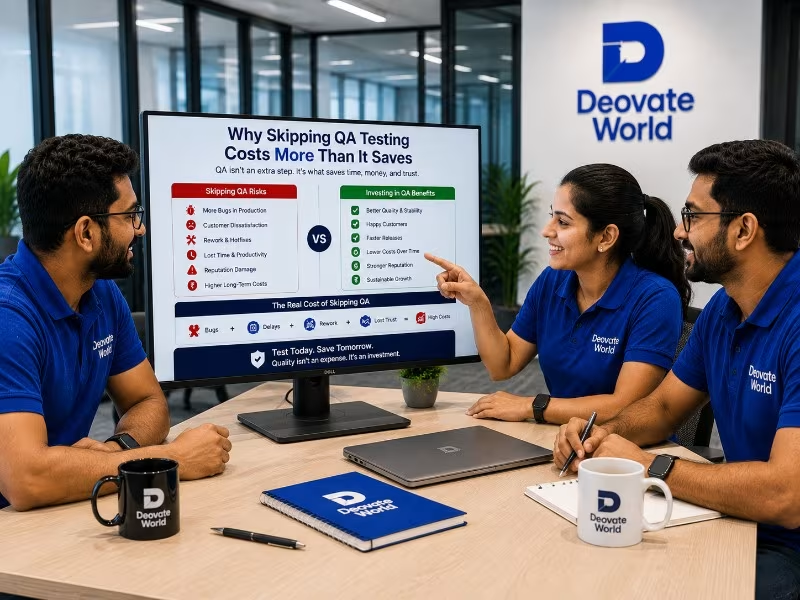
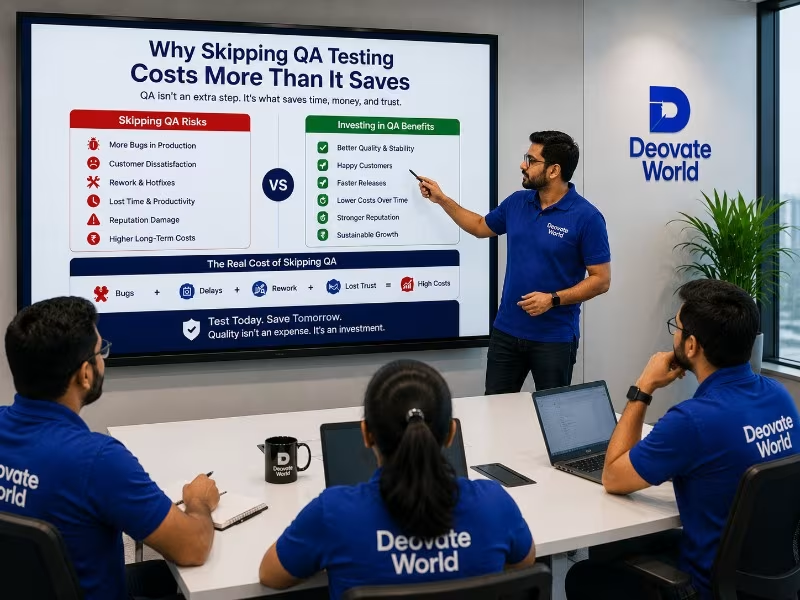
Skipping or shortcutting QA is one of the most common cost-cutting decisions teams make under deadline pressure, and it is also, consistently, one of the most expensive decisions in hindsight. It rarely feels expensive in the moment, the release ships on time, the immediate pressure eases, and the actual cost only becomes visible later, scattered across support tickets, emergency patches, and a slowly eroding sense of customer trust that is much harder to measure than a missed deadline.

The Hidden Math of Skipped Testing

A bug caught during development, by a developer testing their own change or by a dedicated QA pass before release, might take an hour or two to fix. The same bug, if it slips through and is caught only after release, once it has actually affected real customers and generated support tickets, requires an emergency patch deployed under pressure, and can easily cost several times that in engineering time alone, before even counting the cost of the customer trust damaged along the way, or the developer time diverted away from planned work to deal with the fire.

Where the Real Cost Shows Up

  1. Emergency hotfixes deployed under pressure, which carry meaningfully higher risk of introducing a second, unrelated bug in the rush
  2. Customer support volume spikes from multiple users independently hitting the same underlying issue
  3. Lost trust from customers who experienced the bug directly, some of whom simply leave quietly without ever filing a complaint
  4. Developer time pulled away from planned, valuable work to fight fires that better testing would have prevented
  5. Reputational cost from public reviews or social media mentions of a visibly broken feature

Cost Comparison: Caught Early vs Caught Late

Stage Bug Is Caught Typical Cost to Fix Additional Risk
During development (manual/automated testing) Low, usually under an hour Minimal
During QA before release Low to moderate Minimal, contained to the release cycle
After release, caught by monitoring Moderate to high Support load, urgent patch risk
After release, caught by customer complaints High Trust damage, possible churn, PR risk

Why \"We\'ll Test It in Production\" Is a Trap

Under enough deadline pressure, teams sometimes rationalize skipping thorough QA with the implicit plan of \"we\'ll catch issues once real users start using it.\" This approach quietly shifts the cost of testing onto customers, who did not sign up to be unpaid QA testers and who form their impression of product quality based on exactly this kind of experience. Even when the team does respond quickly to issues found this way, the customer\'s memory of the bug tends to outlast the memory of how quickly it was fixed, and repeated instances of this pattern compound into a broader perception that the product is unreliable, a perception that is disproportionately difficult to undo once established.

Regression Testing: The Quiet Multiplier of QA Value

A single round of testing before a first release catches obvious problems, but the compounding value of QA becomes most visible over time, through regression testing, verifying that new changes have not quietly broken something that was already working correctly. Products with frequent releases and no regression testing discipline tend to accumulate an invisible backlog of small breakages, features that technically stopped working weeks ago but that nobody has noticed yet because nobody was specifically checking. Regular regression testing is what prevents a fast release cadence from slowly eroding overall product reliability without anyone realizing it is happening.

What \"Enough\" QA Actually Looks Like

The goal is not exhaustive testing of every possible scenario before every release, that standard is rarely practical and often not worth the time investment relative to the risk involved. The goal is proportional testing, thorough coverage of critical paths, payment, authentication, core workflows, combined with lighter, faster checks on lower-risk areas, and automated regression coverage on anything that has broken before or that the business genuinely cannot afford to have fail. Calibrating this proportionally, rather than either skipping QA entirely or over-testing everything uniformly, is what makes a sustainable QA process, one a team can actually maintain release after release without it becoming a bottleneck.

The Actual Argument for QA

QA is not a cost center slowing down releases, despite how it often gets framed under deadline pressure, it is what makes fast releases survivable in the first place. A structured testing process lets a team move quickly with genuine confidence, because the safety net catching mistakes is built directly into the process, rather than the alternative, where your customers become the safety net, finding problems for you after the fact and quietly deciding how much of that experience they are willing to tolerate before looking elsewhere.

Final Thought

Every shortcut taken on QA is a bet that nothing important will break, placed by the team least equipped to absorb the consequences if it does not pay off. The businesses that treat QA as a genuine investment, not an optional final step, are consistently the ones able to move fast without that speed quietly costing them trust they worked hard to build.
Gallery

Written by
Mehul Jain
Mehul Jain
Startup Technology Writer
Have a project in mind?

Let's talk about how we can help bring it to life.

Contact Us
Leave a Comment

Share your thoughts on this article

Comments are reviewed before they appear publicly.

0 Comments

Be the first to comment on this article.

More Articles

Brand Identity Mistakes That Are Quietly Costing You Trust

Brand Identity Mistakes That Are Quietly Costing You Trust

Most branding mistakes are not dramatic, they are small inconsistencies that quietly accum...

ERP vs CRM: What Growing Businesses Actually Need First

ERP vs CRM: What Growing Businesses Actually Need First

These two systems get confused constantly, and businesses often invest in the wrong one fi...

Local SEO for Service Businesses: The Complete Practical Guide

Local SEO for Service Businesses: The Complete Practical Guide

For businesses that serve a specific area, showing up in local search results often matter...

Our Development Process

From Vision to Digital Success

Every project we take on moves through the same four stages, not because we lack flexibility, but because skipping steps is exactly how good ideas turn into messy builds. Here's what that looks like in practice.

01 Discovery
02 Planning
03 Development
04 Launch
Deovate/process
Trusted by Businesses Worldwide

What Our Clients Say

Discover how our technology solutions have helped businesses innovate, grow, and achieve lasting success through trusted partnerships and measurable results.

Deovate/reviews
Start Your Digital Journey

Let's Build Something Exceptional

You've seen how we think and how we work. Here's where it turns into your project.

You've read about how we think, who leads the work, and what a project with us
actually looks like day to day. The next step is simple: tell us what you're building, and we'll tell
you honestly whether we're the right fit - and if we are, exactly what that plan looks like.

Start Your Project
FAQs

Frequently Asked Questions

Still have a question after reading about our team and process? Here are the ones people ask most.

Deovate

FAQs

Quick answers to common questions

Isn't skipping QA under deadline pressure sometimes the right call to actually hit a launch date?

It can feel like the right call in the moment, but it usually just moves the cost rather than removing it - bugs that would have been caught before launch get caught by real users instead, which costs more in support time, reputation damage, and emergency fixes than the QA time it would have taken upfront. Occasionally a genuinely low-risk shortcut makes sense, but treating this as a routine deadline lever tends to backfire more often than it pays off.

What's a real-world example of a 'small' bug that ended up being expensive because QA was skipped?

A checkout or payment bug is the classic example - something that seems minor in testing but, once live, either blocks real customers from completing purchases or, worse, charges them incorrectly. The cost isn't just the fix itself; it's lost sales during the time the bug went unnoticed, refund and support overhead, and the trust damage from customers who had a bad experience with your product at the worst possible moment.

How much time does proper QA actually add to a project timeline?

It varies with project complexity, but properly scoped QA time is usually a modest percentage of overall project time, not the massive delay it's sometimes assumed to be. The perception that QA is the reason for delays often has it backwards - QA frequently gets compressed or skipped specifically because earlier stages ran over, and it's the easiest phase to cut visibly, even though it's rarely the actual source of the original delay.

Can automated testing fully replace the need for manual QA?

No, and treating it as a full replacement is itself a risky shortcut. Automated tests are excellent for repeatable regression checks - confirming something that worked before still works after a change - but they don't catch usability issues, unexpected edge cases a script wasn't written to check, or how something genuinely feels to use. A combination of both catches meaningfully more than either approach alone.

Is QA more important for certain types of features than others?

Yes - anything touching payments, sensitive data, authentication, or a core conversion flow like checkout or sign-up deserves the most rigorous testing, since a failure there has an outsized cost compared to a minor cosmetic bug elsewhere. When time is genuinely tight, prioritizing QA effort toward these high-risk areas first is a far better trade-off than skipping testing broadly across the whole product.

How do you convince stakeholders that QA time is worth it when they're focused on hitting a deadline?

Framing it in terms of the actual cost of the alternative tends to land better than a general appeal to quality - specifically, the cost of a critical bug reaching real customers, in lost sales, support time, and reputation, compared against the relatively modest time QA would have taken. Concrete past examples, even from other companies' public incidents, often make this case more persuasively than an abstract argument about best practices.

What's the actual cost difference between catching a bug in QA versus after customers find it?

Significantly higher after launch, in nearly every case - a bug found in QA is a quick fix before anyone's affected, while the same bug found by real customers after launch involves support tickets, potential refunds, urgent emergency development work under pressure, and reputational cost that doesn't show up on an invoice but affects future business regardless. This gap tends to be far larger than most non-technical stakeholders initially assume.

Does skipping QA on a 'minor' internal tool really matter as much as on a customer-facing product?

It matters less in terms of external reputation, but it can still cost real time and money internally - a broken internal tool slows down your own team's work, and if it handles anything tied to customer data or financial records, the risk is still meaningful even without external visibility. The stakes are generally lower, but 'lower' isn't the same as 'safe to skip entirely.'

How do you decide how much QA is 'enough' without testing forever and delaying launch indefinitely?

Prioritize testing depth based on risk and usage - your core, most-used flows and anything touching money or sensitive data get the most thorough testing, while lower-traffic, lower-risk features get a lighter pass. This risk-based approach avoids both extremes: skipping QA entirely, or testing every single feature to the same exhaustive depth regardless of how much it actually matters.

What's the realistic first step for a team that's been chronically skipping or shortcutting QA?

Start by identifying your highest-risk, most customer-facing flows and committing to proper testing there first, rather than trying to overhaul your entire QA process across everything at once. Demonstrating the value on the areas that matter most tends to build the internal case for expanding proper QA practice more broadly across the rest of the product over time.

Deovate

Get In Touch

We'd love to hear about your project

Please enter your name.
Please enter a valid email.
Please enter a valid phone number.
Please enter a subject.
Please enter a message.

Thanks! Your message has been noted.

Book a Meeting