- +91-99141-56467
- info@deovateworld.in

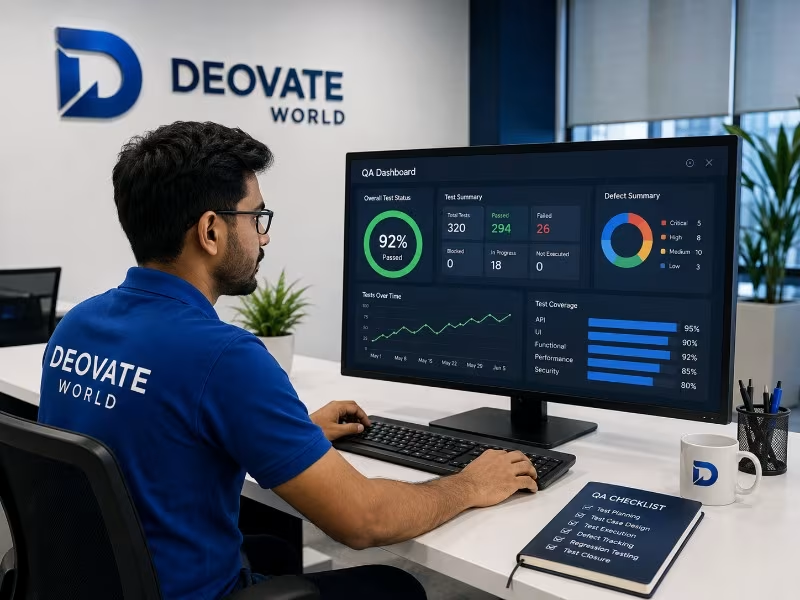
Every bug that reaches a live user costs more than the one caught in development. A checkout button that fails on Safari, an API that times out under real traffic, a form that silently drops data on mobile, these are the moments customers remember, and they decide whether they trust your product again. Comprehensive testing finds these issues before your users do, helping you launch reliable software with confidence.
Most teams do not lack good developers, they lack a structured way to catch what developers cannot see from inside their own code. Software that "works on my machine" and software that works for every real user under real conditions are two different things, and QA is the process that closes that gap before it becomes a public problem.
Selenium, Playwright, Cypress, and Appium for automation; Postman and REST Assured for API testing; JMeter and k6 for performance; Burp Suite and OWASP ZAP for security; Jira and TestRail for tracking; integrated directly into CI/CD via Jenkins or GitHub Actions.
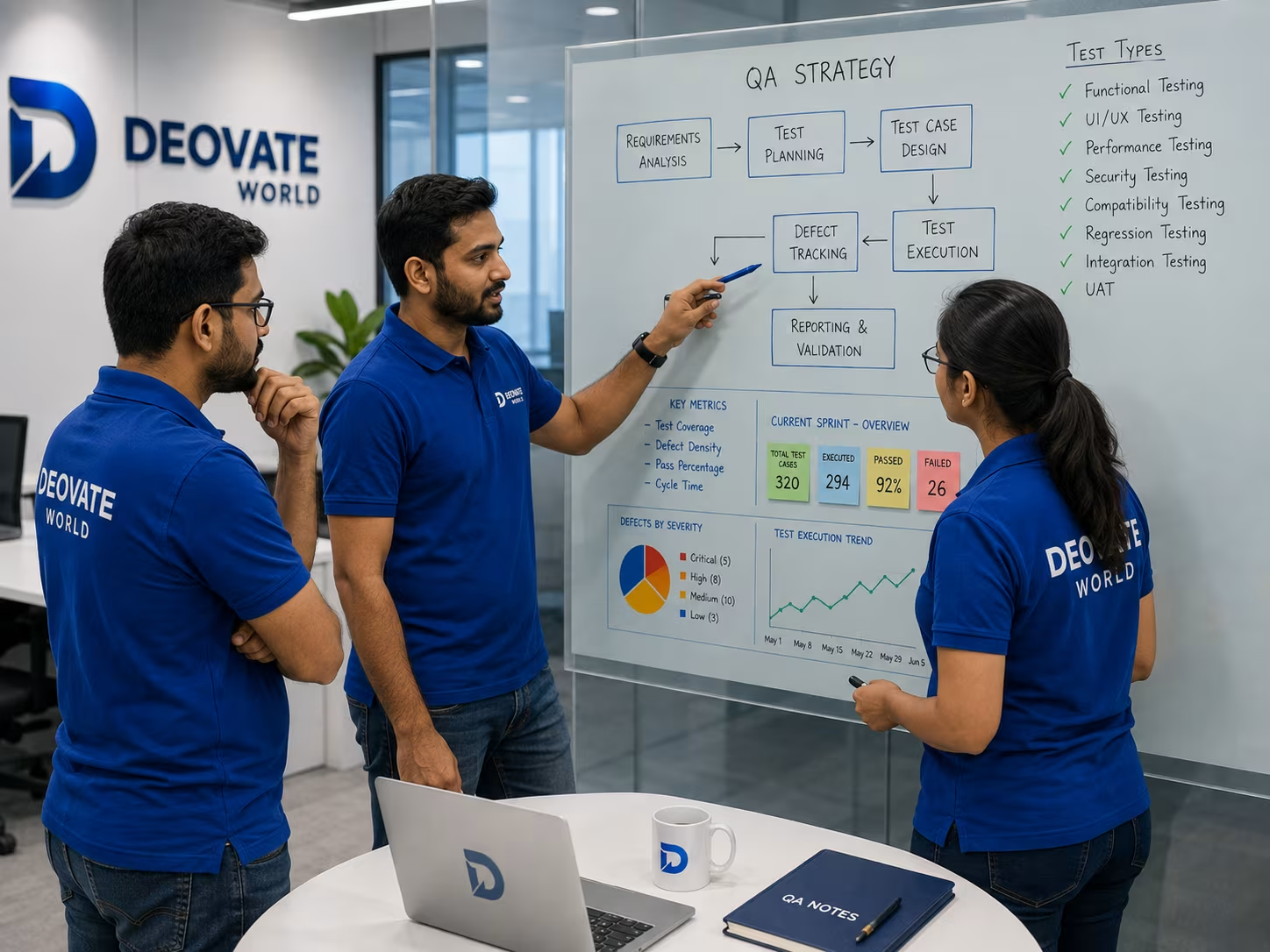
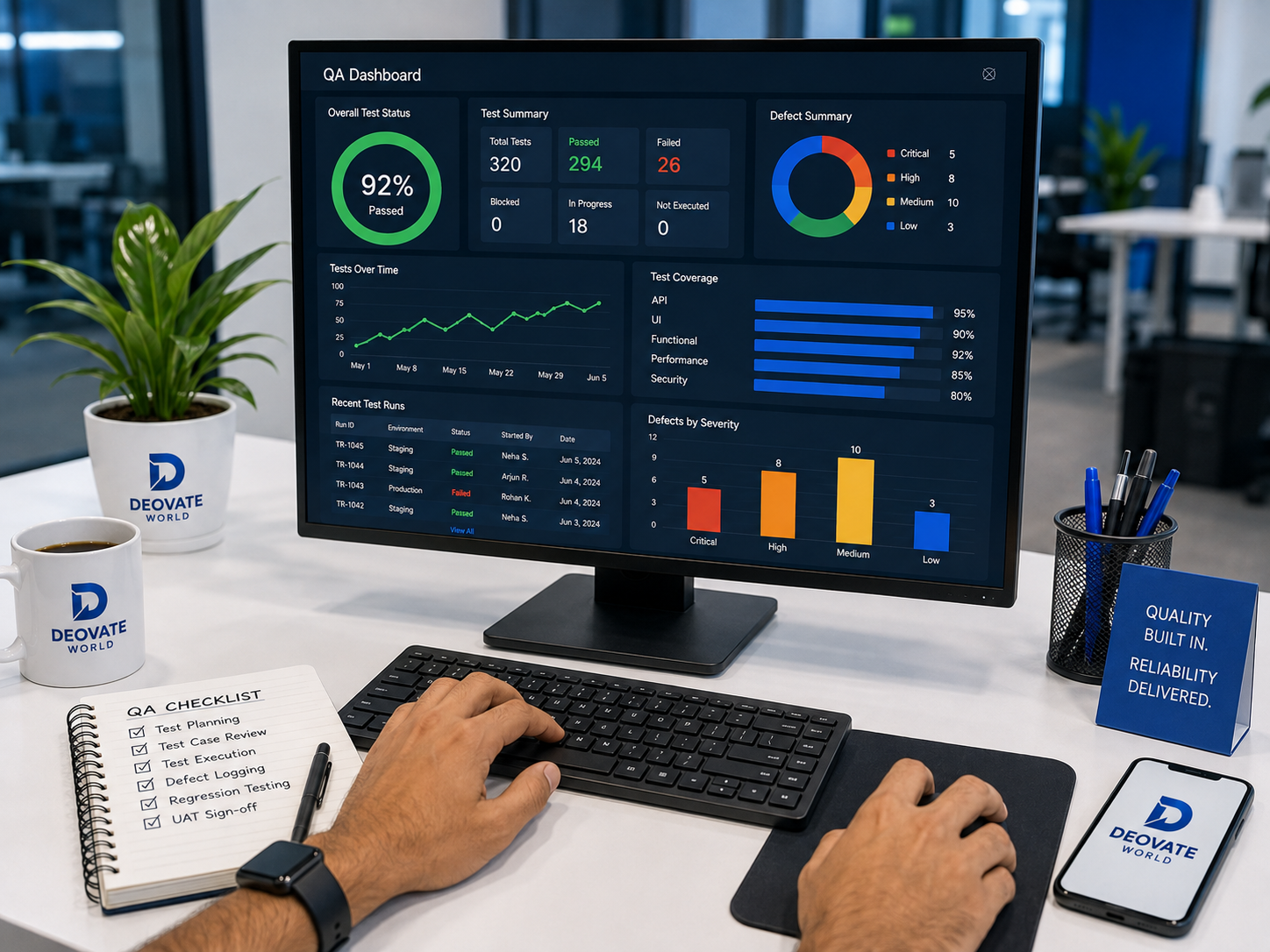
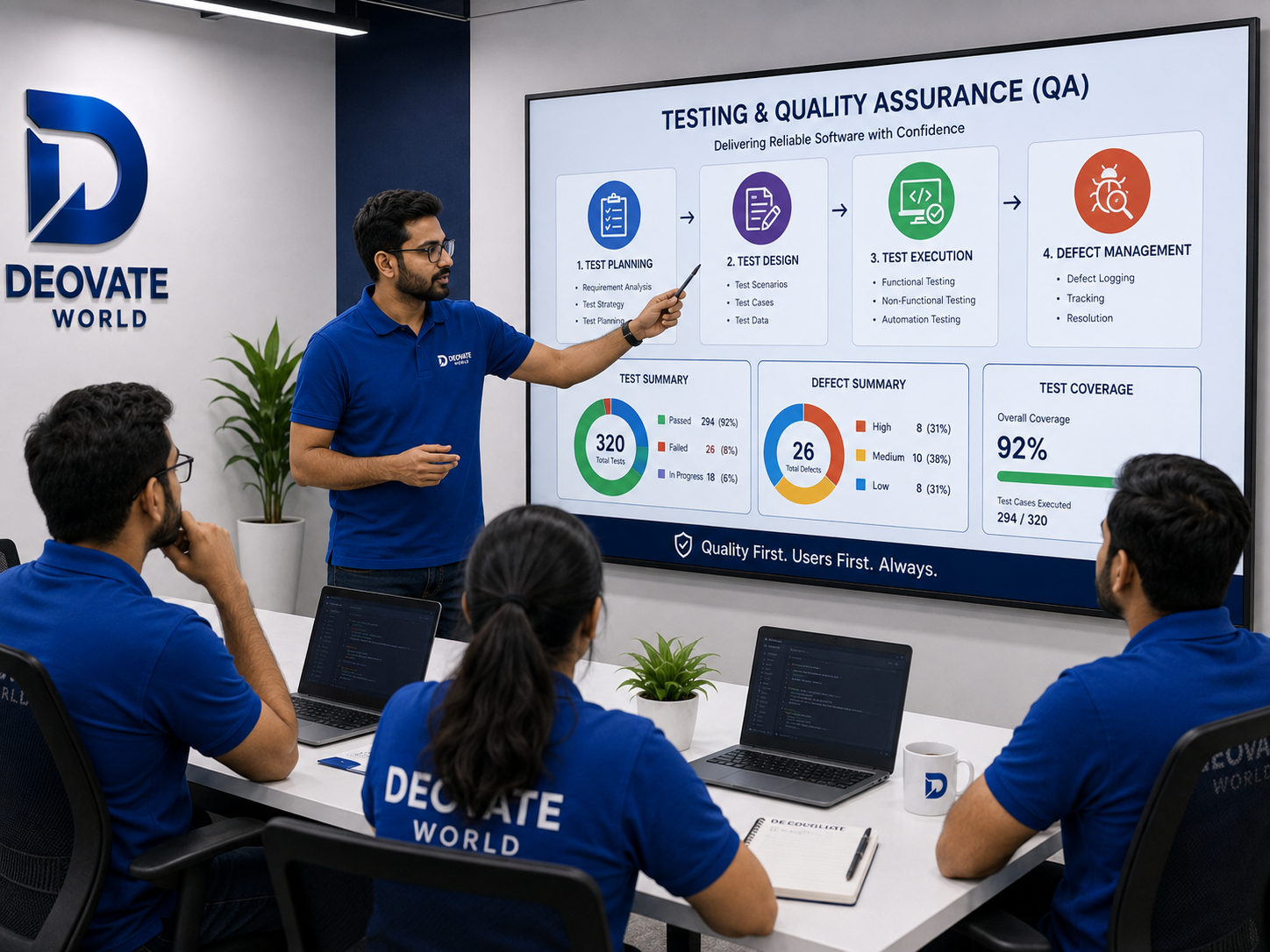
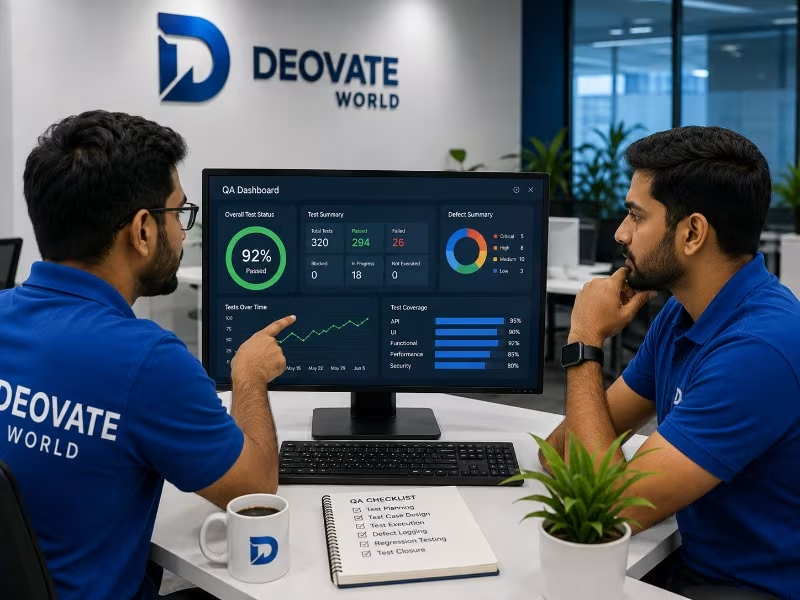
A closer look at everything included with Testing & Quality Assurance (QA) — explore each capability in detail.

The real challenges businesses face with Testing & Quality Assurance (QA) — and exactly how we solve them.
We're putting the finishing touches on this. Check back shortly.
Every project we take on moves through the same four stages, not because we lack flexibility, but because skipping steps is exactly how good ideas turn into messy builds. Here's what that looks like in practice.
Discover how our technology solutions have helped businesses innovate, grow, and achieve lasting success through trusted partnerships and measurable results.
We used their web development and SEO services together, and having one team handle both meant the site was actually built to rank well from day one instead of retrofitted later.
The branding work they did for us flowed directly into the website design, so everything felt cohesive instead of looking like two separate projects stitched together.
Good range of services and each one delivered solidly. I'd have liked a bit more upfront guidance on which services to prioritize first given our limited initial budget.
We started with just a website build and later added their maintenance plan, and the transition between the two was seamless since it was the same team throughout.
Their custom software service actually delivered something built around how our compliance team actually works, not a generic system we'd have to awkwardly adapt our process around.
The digital marketing service paired well with the eCommerce build, since the same team understood exactly what the site could actually deliver before setting campaign expectations.
You've seen how we think and how we work. Here's where it turns into your project.
You've read about how we think, who leads the work, and what a project with us
actually looks like day to day. The next step is simple: tell us what you're building, and we'll tell
you honestly whether we're the right fit - and if we are, exactly what that plan looks like.
Still have a question after reading about our team and process? Here are the ones people ask most.
Quick answers to common questions
Both. Some clients need a focused testing pass before a major release - a launch, a big feature rollout - and that's a standalone engagement with a clear scope and timeline. Others bring us in as an ongoing extension of their team, testing across every sprint as part of their regular development cycle. We'll recommend which fits based on how your team currently ships software, not push the bigger ongoing engagement by default when a one-time audit genuinely covers what you need.
Yes, we regularly take over QA for live products with no prior documentation, which is honestly a fairly common starting point. We begin by mapping the current state of the product ourselves - what it does, where the risky areas are, what's already broken versus what's fragile but working - before building a test plan around that understanding. This upfront mapping takes real time, and we'll be clear about that as part of scoping rather than rushing straight into testing without it.
Yes, we set up automated test suites to run on every build, so quality checks happen continuously as code changes rather than only right before a release when it's more expensive and stressful to catch problems. This includes deciding what should be automated versus what genuinely needs manual testing, since not everything is worth automating, especially exploratory or usability-focused testing that benefits from a human actually using the product.
Every defect gets logged directly in the tracking tool your team already uses, with clear steps to reproduce it, screenshots or screen recordings where relevant, and a severity rating so your developers know what to prioritize first. We won't dump a vague bug report that says something like 'it's broken' without enough detail to actually reproduce and fix it - that just creates more back-and-forth and slows everyone down.
Both, and the right mix depends on what you're actually testing. Automated tests are great for regression testing - making sure something that worked before still works after a change - and for running the same checks repeatedly and quickly. Manual, exploratory testing is better for catching usability issues, edge cases a script wouldn't think to check, and genuinely how something feels to use. We'll recommend the right balance for your specific product rather than defaulting entirely to one approach.
We test on real devices for anything where device-specific behavior genuinely matters - things like touch interactions, camera or GPS features, or performance under real-world conditions that emulators don't always represent accurately. Emulators are useful for quick, broad coverage across many screen sizes, but we don't rely on them exclusively for anything customer-facing and critical, since real device behavior can differ in ways that matter to actual users.
We focus first on the highest-risk areas - core user flows like checkout, sign-up, or payment, anything handling sensitive data, and anything that changed most recently, since new code is statistically more likely to have introduced a bug. Lower-risk, rarely-used features get tested with less depth if time is genuinely constrained. We'll be upfront about what got less coverage due to time pressure, rather than implying full coverage happened when it didn't.
We include basic security-focused testing as part of QA - checking for common vulnerabilities like exposed data, weak input validation, or authentication issues - though a full, dedicated security audit or penetration test is a more specialized, separate engagement if that's specifically what you need. We'll flag if something we find during regular QA looks like it needs that deeper specialized review, rather than either ignoring it or overselling our standard testing as a full security audit.
We flag it immediately, with clear severity and reproduction steps, rather than sitting on it until a scheduled report. You and your team then decide whether it's launch-blocking or something that can ship with a known workaround and get fixed shortly after - that's ultimately your call to make, but we'll give you an honest, direct assessment of the actual risk rather than downplaying it just because the launch date is close.
Tell us what you're testing, roughly where you are in the development cycle, and any deadline you're working against. From there we can recommend whether a one-time testing pass or an ongoing QA arrangement fits better, and give you a realistic sense of what depth of testing is achievable in the time available, rather than promising full coverage in a timeframe that doesn't actually support it.
We'd love to hear about your project