- +91-99141-56467
- info@deovateworld.in

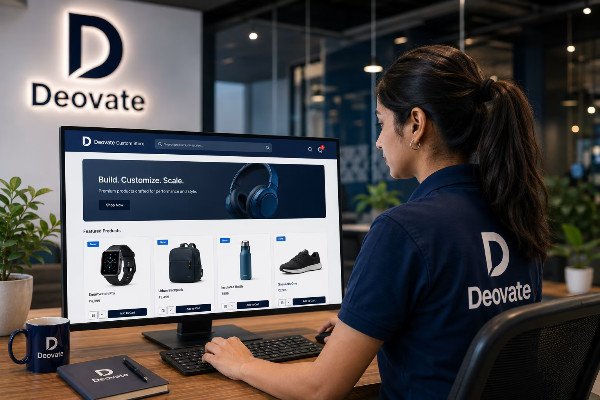
An online store is judged in seconds, not minutes. If checkout feels slow, confusing, or untrustworthy, the sale is gone before your product even gets a fair look, no matter how good it actually is. We build stores engineered around conversion first, not just visual polish, so the people who land on your site actually complete a purchase instead of abandoning a full cart.
Every year more buying decisions move online, and the businesses that treat their store as a real sales channel, not just a digital brochure, are the ones capturing that shift. A store that is slow, hard to navigate on mobile, or has a clunky checkout is quietly losing revenue that a competitor with a better-built store is picking up instead.
Shopify, WooCommerce, Magento, custom builds on Laravel or Node.js, and payment integrations including Stripe, PayPal, Razorpay, and regional gateways as needed.
A closer look at everything included with eCommerce Development — explore each capability in detail.
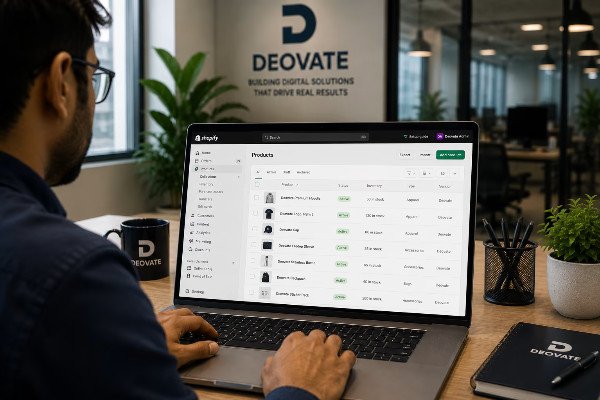
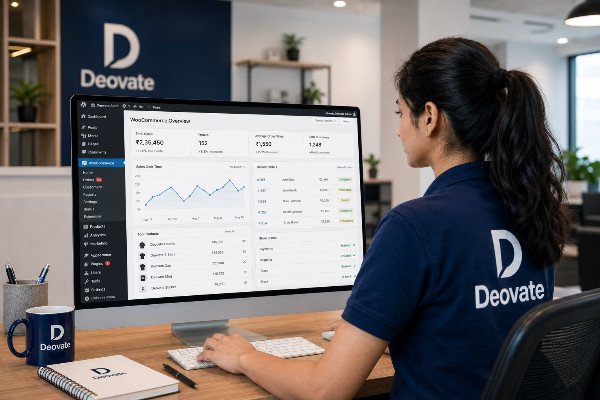
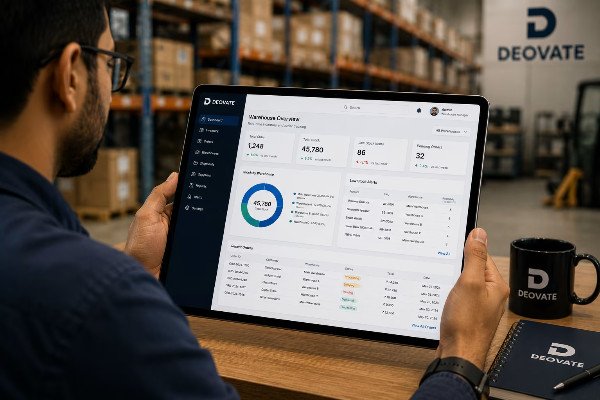
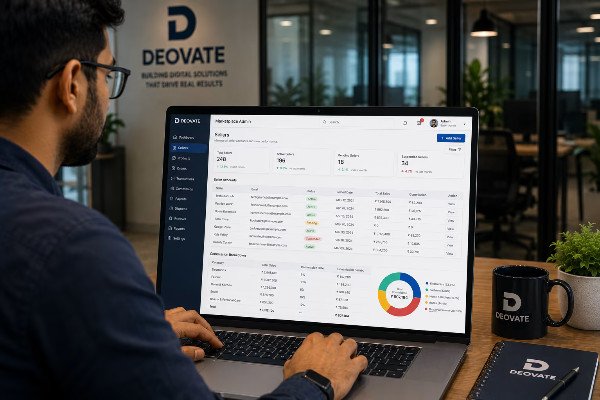
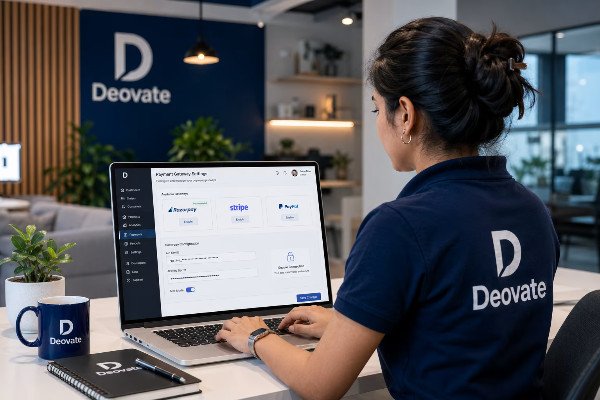
The real challenges businesses face with eCommerce Development — and exactly how we solve them.
We're putting the finishing touches on this. Check back shortly.
Every project we take on moves through the same four stages, not because we lack flexibility, but because skipping steps is exactly how good ideas turn into messy builds. Here's what that looks like in practice.
Discover how our technology solutions have helped businesses innovate, grow, and achieve lasting success through trusted partnerships and measurable results.
We used their web development and SEO services together, and having one team handle both meant the site was actually built to rank well from day one instead of retrofitted later.
The branding work they did for us flowed directly into the website design, so everything felt cohesive instead of looking like two separate projects stitched together.
Good range of services and each one delivered solidly. I'd have liked a bit more upfront guidance on which services to prioritize first given our limited initial budget.
We started with just a website build and later added their maintenance plan, and the transition between the two was seamless since it was the same team throughout.
Their custom software service actually delivered something built around how our compliance team actually works, not a generic system we'd have to awkwardly adapt our process around.
The digital marketing service paired well with the eCommerce build, since the same team understood exactly what the site could actually deliver before setting campaign expectations.
You've seen how we think and how we work. Here's where it turns into your project.
You've read about how we think, who leads the work, and what a project with us
actually looks like day to day. The next step is simple: tell us what you're building, and we'll tell
you honestly whether we're the right fit - and if we are, exactly what that plan looks like.
Still have a question after reading about our team and process? Here are the ones people ask most.
Quick answers to common questions
Shopify or WooCommerce fits most standard product catalogs well, especially if you're selling a straightforward range of products without unusual pricing logic or workflow needs. A custom build starts making sense once your catalog size, pricing rules, or order workflow gets complex enough that off-the-shelf platforms start fighting you rather than helping. We'll assess your actual catalog and processes before recommending a direction, rather than defaulting to whichever platform is easiest for us to build - the goal is the right fit for your business, not the path of least resistance for us.
Yes, and this is one of the most sensitive parts of any migration, so we treat it carefully. We handle full data migration - products, customer accounts, and historical orders - with validation steps to confirm everything landed correctly before your old store goes offline. We also plan for redirects on your existing product and category URLs, since losing that SEO equity during a platform switch is a common and avoidable mistake. Nothing goes live until we've confirmed the new store matches what the old one had, not just visually but in the underlying data.
We offer ongoing maintenance covering plugin and platform updates, performance monitoring, and support during high-traffic periods like sales events or seasonal spikes, since that's exactly when a store failure costs you the most. You're not required to take an ongoing plan, but eCommerce platforms need regular updates for security and compatibility, and skipping that is one of the more common ways stores end up broken or vulnerable months down the line. If you'd rather manage day-to-day maintenance in-house, we'll make sure your team has what they need to do it properly.
We integrate established, trusted payment gateways rather than building custom payment handling, which keeps you within PCI compliance boundaries without your store ever directly touching raw card data. Which gateway makes sense depends on your region, currencies, and existing merchant account setup, and we'll walk through those options rather than picking one by default. Checkout is also one of the areas we test most thoroughly, since a broken or confusing checkout flow is the single fastest way to lose a sale you already had.
That's something we plan for specifically, not something we hope holds up on its own. We look at hosting capacity, caching, and how the store performs under load before a major sale, not after it crashes. If your current hosting or platform setup genuinely can't handle projected traffic, we'll flag that honestly ahead of time rather than let you find out during your busiest sales day of the year. Scaling for a spike is a very different conversation from scaling for steady daily traffic, and we treat it as such.
Yes, this is exactly the kind of thing that pushes a project from a standard platform build into custom territory - variable pricing based on options, bundled discounts, tiered wholesale pricing, or configurable products with dependent options. Off-the-shelf platforms can sometimes handle simpler versions of this with plugins, but genuinely complex pricing logic usually needs custom development to get right and keep maintainable. We'll be honest about which route fits your specific pricing model rather than forcing a plugin-based workaround that breaks the moment your rules get more complicated.
We can set up inventory syncing across your website, marketplaces, and physical point-of-sale if that applies, so you're not manually updating stock counts in three places and risking overselling something that's already gone. This usually involves connecting to the relevant APIs for each channel you sell through, and the complexity depends heavily on which platforms are involved and how real-time the sync needs to be. We'll map out your actual sales channels first before proposing a syncing setup, since a generic answer here tends to miss the specific gaps that matter.
Basic on-page SEO fundamentals - clean URLs, proper heading structure, image alt text, schema markup for products and reviews - are built into the store from the start, since retrofitting these later is more work than doing it right the first time. Deeper, ongoing SEO strategy - keyword research, content, link building - is a separate, more involved service, and we'll be clear about where the line is rather than implying a full SEO campaign is included in a store build by default.
We set up the admin-side tools for managing orders, processing refunds, and tracking return requests as part of the build, so you're not relying on a third-party app for basic operations your platform should already handle. If your business has specific return policies or workflows - restocking fees, exchange-only policies, return windows tied to product type - we build those rules in rather than leaving you to work around a generic default. The goal is that running the store day to day doesn't require calling us for routine tasks.
Tell us what you're currently selling and how, even if it's informal right now - a spreadsheet, a marketplace listing, a physical shop with no website at all. From there we can recommend whether a standard platform build or something more custom fits, give you a realistic timeline, and outline what we'd need from you along the way, like product images and descriptions. There's no obligation after that conversation - it's meant to give you a clear picture before you commit to anything.
We'd love to hear about your project