- +91-99141-56467
- info@deovateworld.in

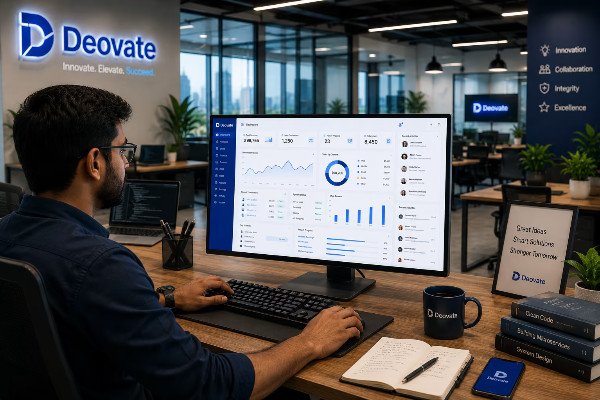
Off-the-shelf software is built for the average business, which means it is never quite built for yours. Sooner or later you find yourself working around its limitations instead of the other way around. Custom software is built the opposite way, starting from how your team actually operates, so the tool fits the process instead of forcing the process to bend around the tool.
Businesses usually reach for custom software after they have already tried to force a generic tool to do something it was never designed for, spreadsheets patched together, workarounds that break every few months, manual steps nobody trusts completely. Custom software removes that friction permanently by solving the actual problem instead of adapting a generic one.
PHP (Laravel), Node.js, Python, React, Vue, MySQL, PostgreSQL, and cloud infrastructure on AWS or Azure depending on the scale and requirements of the system.
A closer look at everything included with Custom Software Development — explore each capability in detail.
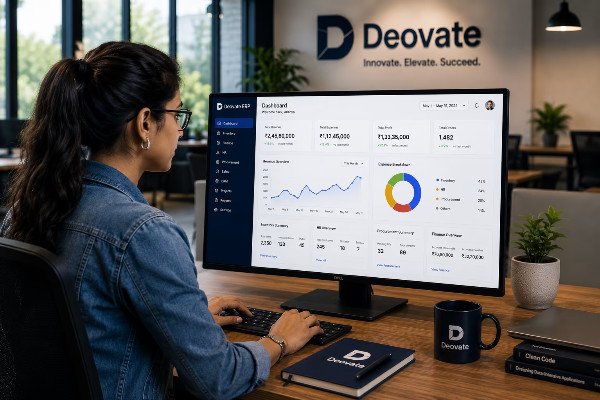
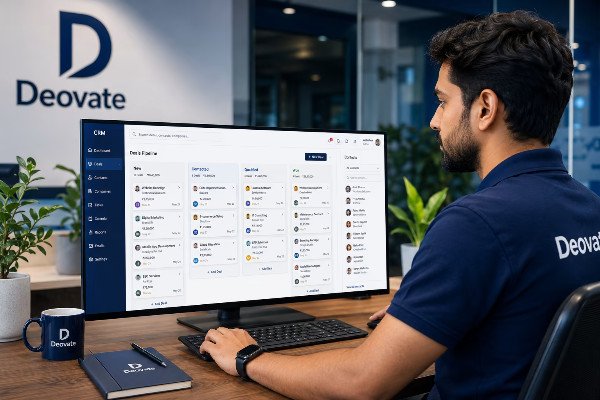
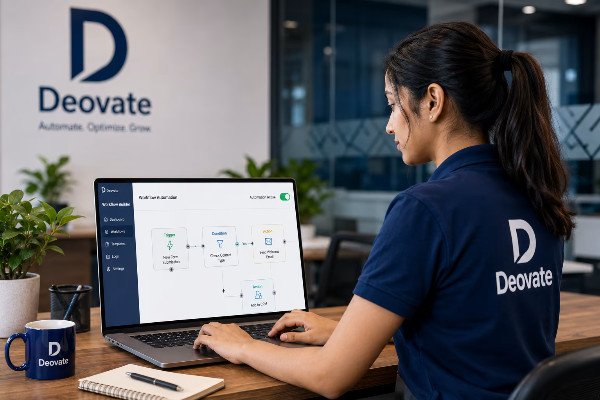
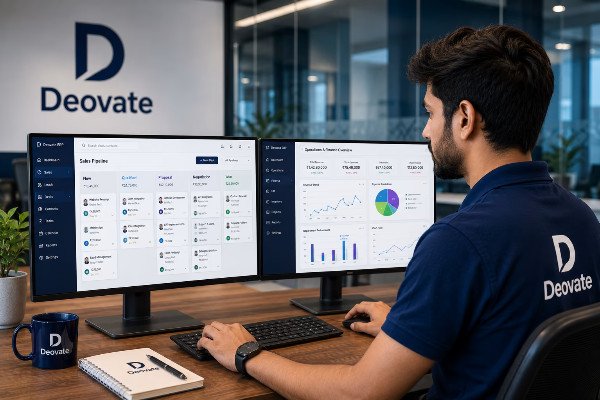
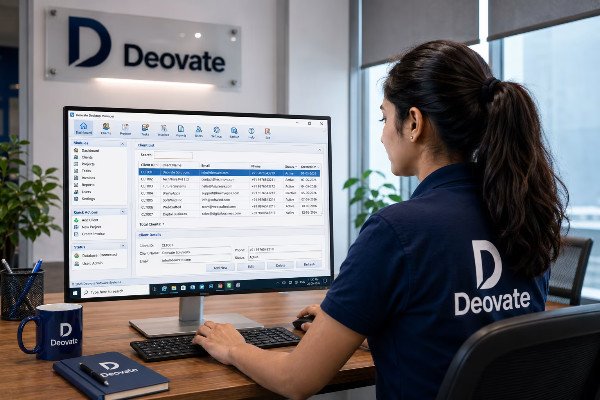
The real challenges businesses face with Custom Software Development — and exactly how we solve them.
We're putting the finishing touches on this. Check back shortly.
Every project we take on moves through the same four stages, not because we lack flexibility, but because skipping steps is exactly how good ideas turn into messy builds. Here's what that looks like in practice.
Discover how our technology solutions have helped businesses innovate, grow, and achieve lasting success through trusted partnerships and measurable results.
We used their web development and SEO services together, and having one team handle both meant the site was actually built to rank well from day one instead of retrofitted later.
The branding work they did for us flowed directly into the website design, so everything felt cohesive instead of looking like two separate projects stitched together.
Good range of services and each one delivered solidly. I'd have liked a bit more upfront guidance on which services to prioritize first given our limited initial budget.
We started with just a website build and later added their maintenance plan, and the transition between the two was seamless since it was the same team throughout.
Their custom software service actually delivered something built around how our compliance team actually works, not a generic system we'd have to awkwardly adapt our process around.
The digital marketing service paired well with the eCommerce build, since the same team understood exactly what the site could actually deliver before setting campaign expectations.
You've seen how we think and how we work. Here's where it turns into your project.
You've read about how we think, who leads the work, and what a project with us
actually looks like day to day. The next step is simple: tell us what you're building, and we'll tell
you honestly whether we're the right fit - and if we are, exactly what that plan looks like.
Still have a question after reading about our team and process? Here are the ones people ask most.
Quick answers to common questions
An off-the-shelf SaaS tool solves a generic version of your problem and charges you monthly indefinitely for the privilege, usually while forcing your workflow to bend around its limitations. Custom software solves your specific problem the way your business actually operates, and once it's built, you own it rather than renting access forever. The trade-off is upfront cost and time versus a subscription you can cancel anytime, so it's not automatically the right call for every situation - if a $50-a-month tool already does 90% of what you need, we'll tell you that instead of pitching a custom build you don't need.
It depends heavily on scope. A focused internal tool - something that automates one specific workflow - might take six to eight weeks. A full ERP system, a multi-user platform, or something with complex permissions and integrations can take several months, sometimes longer if requirements are still evolving mid-project. We break the work into phases with working checkpoints rather than disappearing for months and reappearing with a finished product, so you can see progress and redirect early if something's off. Vague scope is the single biggest thing that stretches a timeline, which is why we push hard on nailing down requirements before development starts.
No, and honestly that's where a lot of custom software problems actually start for businesses that go elsewhere. We offer ongoing maintenance and support plans so the system keeps running smoothly, security patches get applied, and the software can evolve as your business needs change - because it will change. Software that isn't maintained tends to accumulate small issues that eventually become big ones. You're not locked into a support plan, but going without one on anything business-critical is a risk we'll flag honestly rather than stay quiet about to close the sale.
You do, in full - source code, documentation, and any credentials tied to the system. This isn't something you need to negotiate for; it's standard on every custom build we do, since the entire point of custom software is that it's yours, not something you're renting from us indefinitely. If you ever want to bring development in-house or move to a different team, you can take everything with you. We're upfront about this from the proposal stage because it's exactly the kind of thing that should never be a surprise buried in fine print.
In most cases, yes. We regularly extend or integrate with existing systems rather than insisting on a rebuild, especially when the core of what you have still works and just needs new capability layered on. A full rewrite only makes sense when the existing codebase is genuinely unstable, insecure, or too tangled to safely extend - and we'll tell you plainly if that's the situation rather than defaulting to the more expensive answer. Our first step is usually understanding what you have before recommending what to do about it.
Requirements shifting mid-project is normal, not a failure of planning - businesses learn things about their own needs once they see software taking shape. We build in checkpoints specifically so changes get caught early rather than after months of development in the wrong direction. Small adjustments usually fold into the existing plan; larger scope changes get discussed openly in terms of what they'll add to timeline and cost, rather than silently absorbed or silently ignored. What we avoid is scope creep nobody acknowledged - if something changes, we name it and adjust the plan together.
We choose the stack based on what actually fits the project - your team's existing skills, hosting environment, scalability needs, and the nature of the problem - rather than forcing every client into the same framework because it's what we default to. That might mean a modern PHP framework, a Node-based backend, or something else entirely depending on the specifics. What matters more than the specific language is whether the architecture is documented, maintainable, and not built around obscure tools nobody else on your team could pick up later if needed.
Clear scope upfront is the biggest lever - vague requirements are where most cost overruns start, not unexpected technical difficulty. We break the project into defined phases with agreed deliverables, so you know what you're paying for at each stage rather than getting one large invoice at the end with no visibility along the way. If something during development reveals that a feature is more complex than initially scoped, we flag it immediately with the cost and time impact rather than quietly running over and explaining it later.
Yes - we treat data handling as a requirement from day one, not something addressed after launch. That includes secure authentication, encrypted connections, and limiting access to only what's necessary during development and testing. If your project involves sensitive data - customer records, payment information, health data - we'll flag any relevant compliance considerations early rather than discovering them after the system is already built around the wrong assumptions. Security isn't a checkbox we add at the end; it shapes decisions from the architecture stage forward.
A discovery conversation, not a sales pitch. We ask about the actual problem you're trying to solve, how your team currently works around it, and what a good outcome looks like for your business specifically. From there we can tell you honestly whether custom software is even the right call, or whether something simpler would solve it faster and cheaper. There's no obligation to move forward after that call - it's meant to give you clarity either way, not lock you into anything.
We'd love to hear about your project