- +91-99141-56467
- info@deovateworld.in

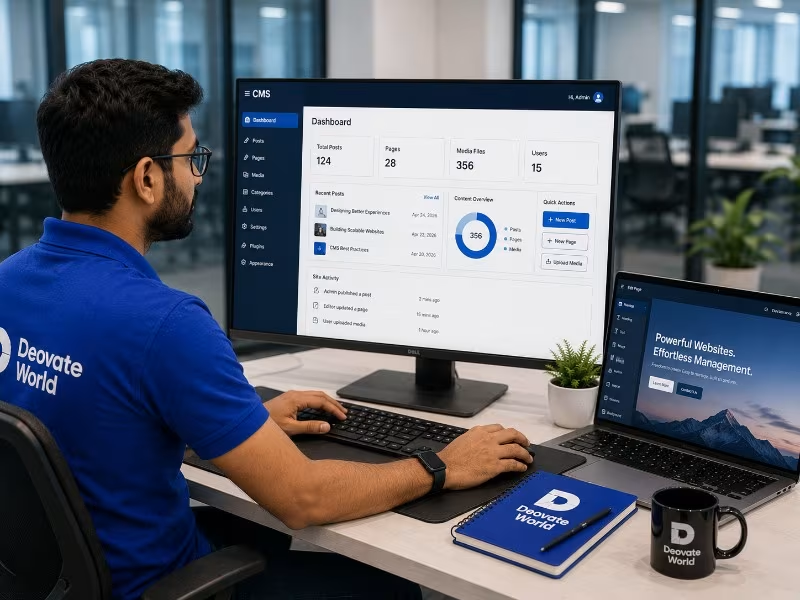
Your content should not require a developer every single time it needs to change. We build content management systems that give your team real independence over pages, blog posts, and product listings, without sacrificing design consistency or site performance in the process.
Businesses that rely on a developer for every content change end up publishing less often, because the friction of asking, waiting, and paying for small updates adds up. A properly built CMS removes that bottleneck entirely, putting control back in the hands of the people who actually create the content.
WordPress, Webflow, Strapi and other headless CMS platforms, and custom-built admin panels for fully bespoke content needs.
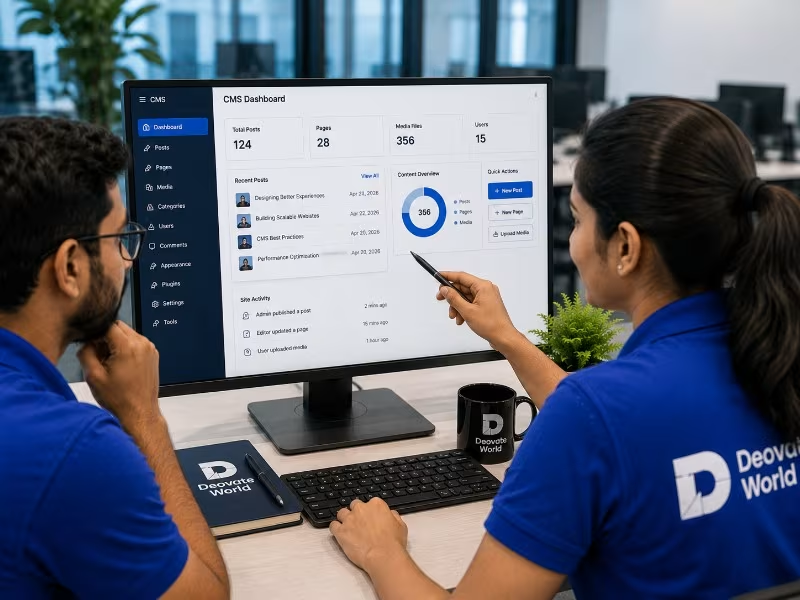
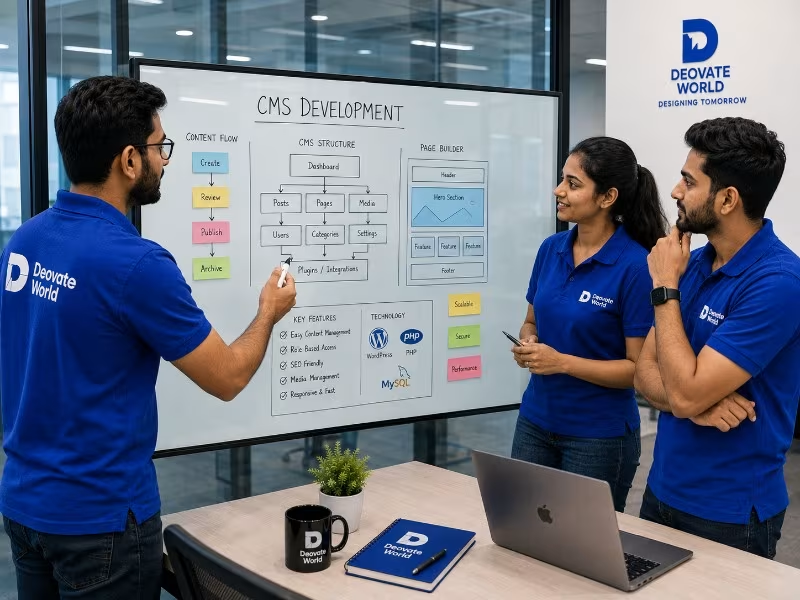
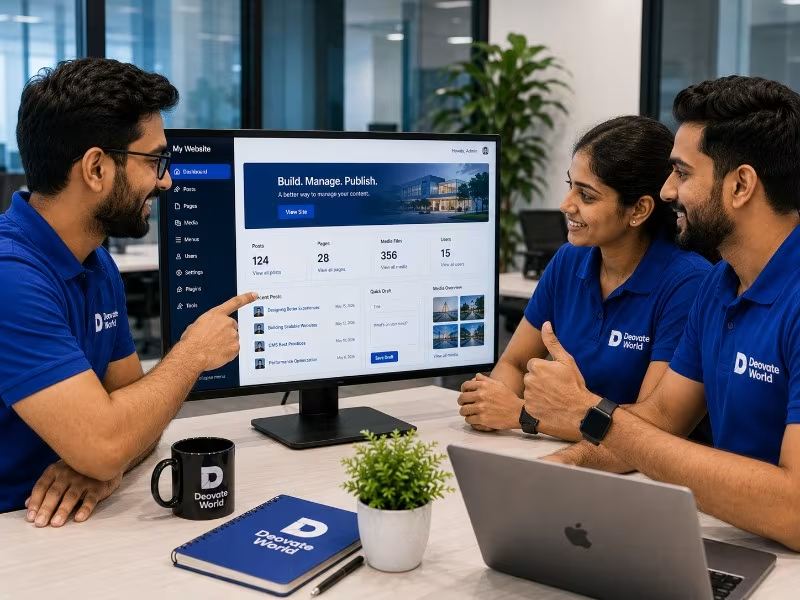
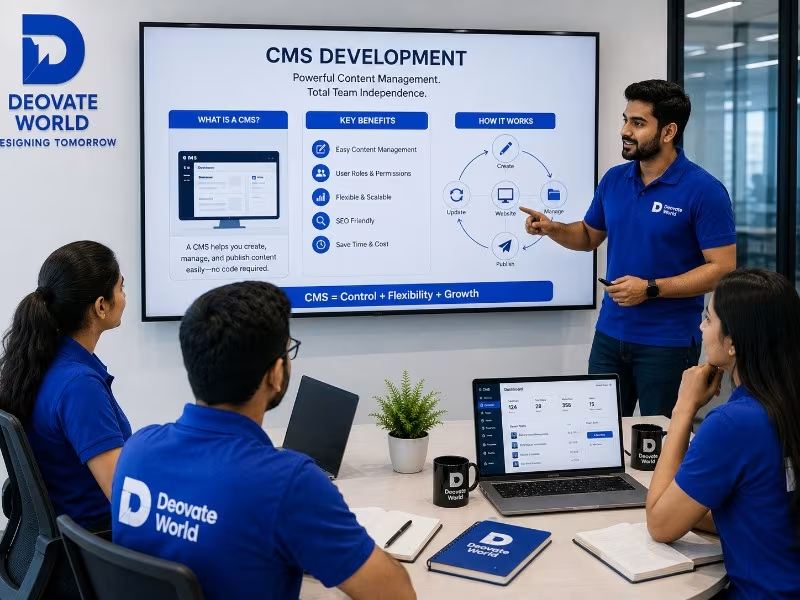
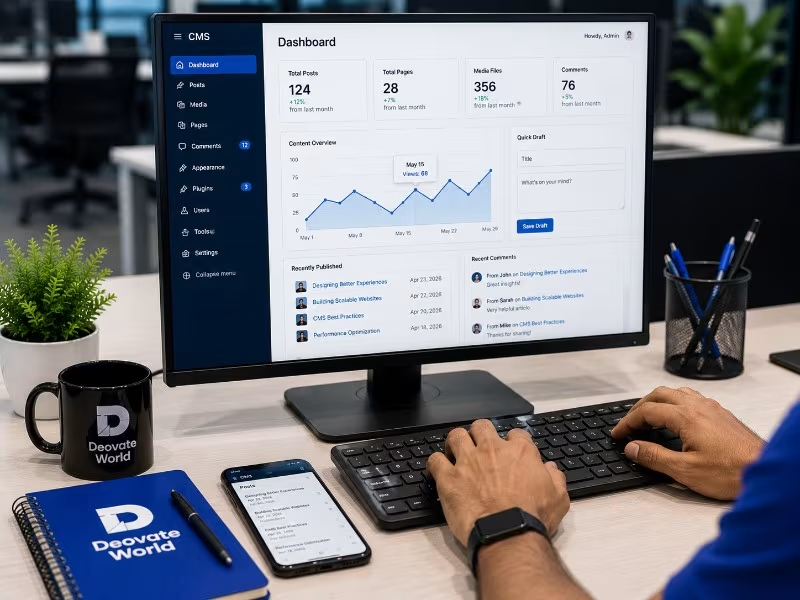
A closer look at everything included with CMS Development — explore each capability in detail.
The real challenges businesses face with CMS Development — and exactly how we solve them.
We're putting the finishing touches on this. Check back shortly.
Every project we take on moves through the same four stages, not because we lack flexibility, but because skipping steps is exactly how good ideas turn into messy builds. Here's what that looks like in practice.
Discover how our technology solutions have helped businesses innovate, grow, and achieve lasting success through trusted partnerships and measurable results.
We used their web development and SEO services together, and having one team handle both meant the site was actually built to rank well from day one instead of retrofitted later.
The branding work they did for us flowed directly into the website design, so everything felt cohesive instead of looking like two separate projects stitched together.
Good range of services and each one delivered solidly. I'd have liked a bit more upfront guidance on which services to prioritize first given our limited initial budget.
We started with just a website build and later added their maintenance plan, and the transition between the two was seamless since it was the same team throughout.
Their custom software service actually delivered something built around how our compliance team actually works, not a generic system we'd have to awkwardly adapt our process around.
The digital marketing service paired well with the eCommerce build, since the same team understood exactly what the site could actually deliver before setting campaign expectations.
You've seen how we think and how we work. Here's where it turns into your project.
You've read about how we think, who leads the work, and what a project with us
actually looks like day to day. The next step is simple: tell us what you're building, and we'll tell
you honestly whether we're the right fit - and if we are, exactly what that plan looks like.
Still have a question after reading about our team and process? Here are the ones people ask most.
Quick answers to common questions
Depends on your content complexity and team. WordPress fits most standard business sites well - it's flexible, widely supported, and your team can usually learn it quickly. A headless CMS makes more sense if you're publishing across multiple platforms - a website, a mobile app, other digital touchpoints - from a single content source. We'll ask about how you actually plan to use and manage content before recommending a platform, rather than defaulting to whichever CMS is fastest for us to set up.
Yes, every CMS project includes a walkthrough session so your team feels confident managing content - publishing posts, updating pages, organizing media - independently from day one, rather than calling us for routine tasks that should be simple. We'll also leave you with documentation specific to your setup, not a generic CMS manual that doesn't reflect the custom structure we've built for your site. If new team members join later and need a refresher, that's something we're happy to help with too.
Yes, when it's configured and maintained correctly. Most WordPress security issues stem from outdated plugins, weak hosting, or default configurations that were never hardened, not some inherent flaw in WordPress itself. We address these directly during setup - keeping the plugin footprint minimal, choosing quality hosting, and setting up regular updates - rather than treating security as an afterthought. A well-maintained WordPress site is genuinely secure; a neglected one, on any platform, becomes a risk over time.
We typically build custom themes tailored to your specific design and content structure, rather than starting from a pre-made theme that forces your content into someone else's layout decisions. Pre-made themes can work for very simple sites on tight budgets, and we won't push a custom build if a well-chosen existing theme genuinely fits your needs and budget. But for anything with specific brand requirements or unusual content types, custom is almost always the better long-term investment.
We keep the plugin footprint intentionally minimal from the start, since every additional plugin is another thing that can break, conflict, or go unmaintained by its original developer. If a plugin does become outdated or gets abandoned, we'll flag it during regular maintenance and recommend a replacement before it becomes a security risk or breaks compatibility with a core update. This is exactly the kind of thing an ongoing maintenance plan is designed to catch before it becomes a bigger problem.
Depends on the type of change. Adding new blog posts, pages using existing templates, or media is something your team handles directly without needing us. Creating an entirely new content type - a different kind of page structure with its own custom fields - usually does need development work, since it involves building the underlying structure, not just entering content. We'll be clear about that distinction so you know what's self-serve versus what needs a developer.
We map your existing content structure carefully before migrating - pages, posts, media, custom fields - so nothing gets flattened or lost in the move to a new platform. This also includes setting up proper redirects from old URLs to their new equivalents, since losing that during a migration can quietly damage search rankings you've already built. We validate the migrated content against the original before considering the migration complete, not just a rough visual check.
Often, yes, honestly. A headless CMS adds real complexity - a separate front-end build, more technical maintenance - that only pays off when you genuinely need to publish the same content across multiple platforms or need very specific front-end flexibility that a traditional CMS can't provide. For most standard business websites, a traditional CMS like WordPress does the job with far less overhead. We'll recommend headless only when your actual use case justifies the added complexity, not because it's a trendier approach.
We structure the admin interface around how your team actually thinks about your content, not the CMS's generic default layout - clear labels, sensible field groupings, and hiding technical settings your day-to-day content editors don't need to touch. A CMS that's technically powerful but confusing to use daily ends up underused or misused, which defeats the purpose. Part of our training session specifically covers walking through the interface the way your team will actually use it, not a generic tour of every feature.
Tell us how your team plans to manage content day to day - who's publishing, how often, what kinds of content beyond basic pages and posts. That shapes which platform and structure actually fits, more than the technical specifics do. From there we can recommend a CMS, outline a realistic timeline, and be clear about what training and documentation you'll get at the end.
We'd love to hear about your project