- +91-99141-56467
- info@deovateworld.in

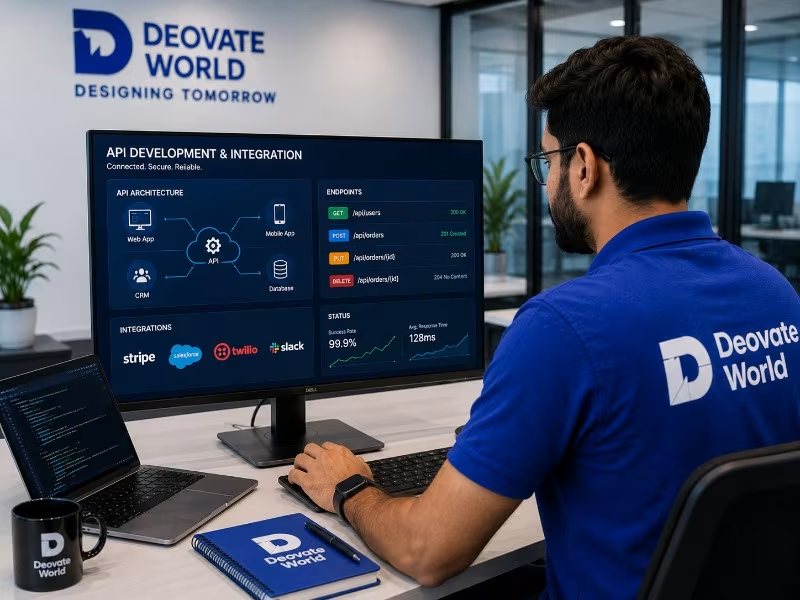
Modern products rarely work in isolation, they connect to payment processors, CRMs, shipping providers, and countless other tools constantly. We build and integrate APIs that keep those connections reliable, secure, and easy to maintain, so one broken integration does not quietly take down half your workflow.
As a business adds more tools to its stack, the connections between them become just as important as the tools themselves. Poorly built integrations create silent data mismatches and manual double-entry, while well-built APIs let information move automatically and accurately between every system that needs it.
Node.js, PHP, Python, Postman for testing and documentation, REST and GraphQL architectures, and OAuth for secure authentication.
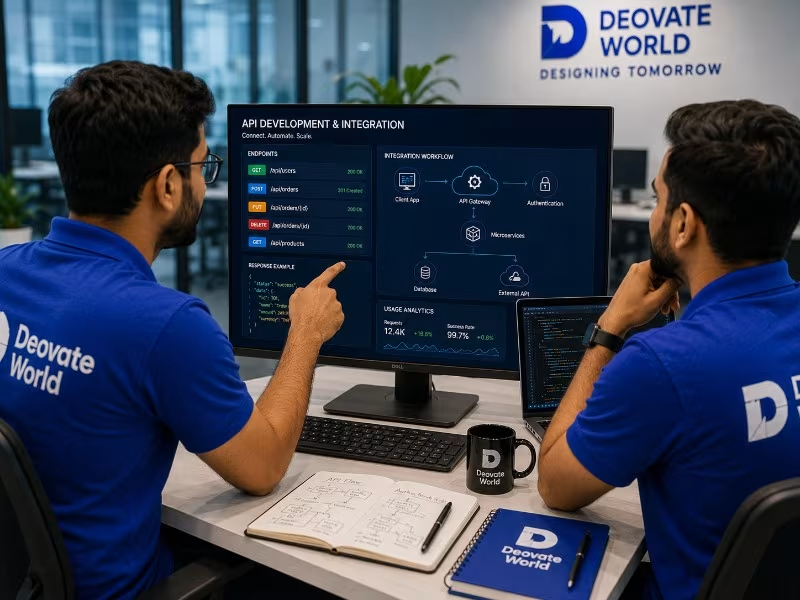
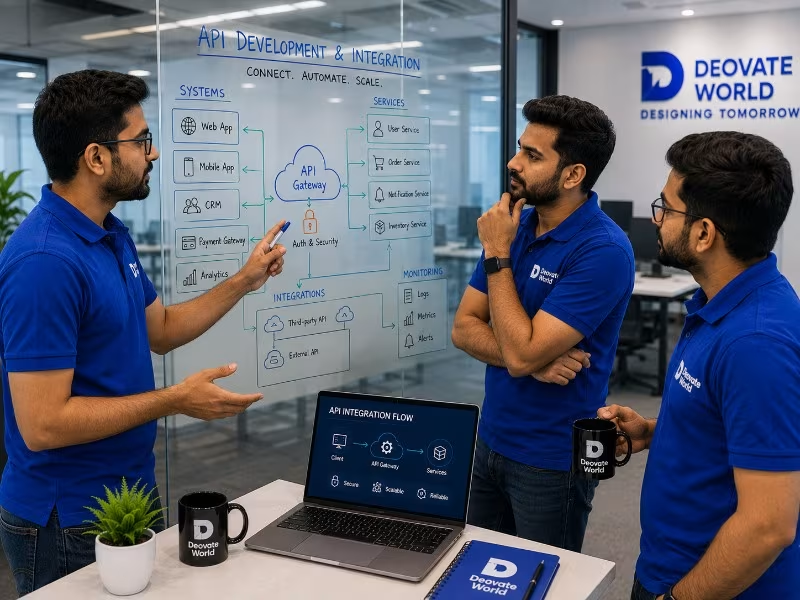

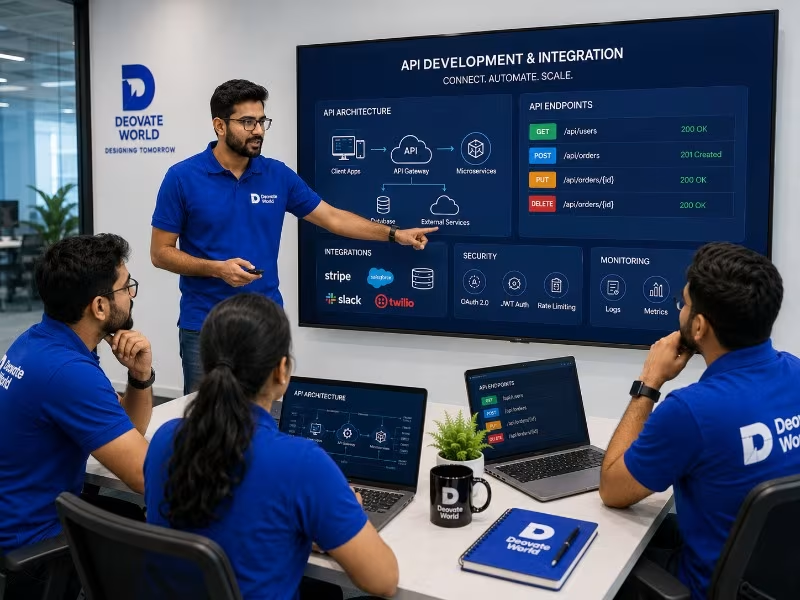

A closer look at everything included with API Development & Integration — explore each capability in detail.

The real challenges businesses face with API Development & Integration — and exactly how we solve them.
We're putting the finishing touches on this. Check back shortly.
Every project we take on moves through the same four stages, not because we lack flexibility, but because skipping steps is exactly how good ideas turn into messy builds. Here's what that looks like in practice.
Discover how our technology solutions have helped businesses innovate, grow, and achieve lasting success through trusted partnerships and measurable results.
We used their web development and SEO services together, and having one team handle both meant the site was actually built to rank well from day one instead of retrofitted later.
The branding work they did for us flowed directly into the website design, so everything felt cohesive instead of looking like two separate projects stitched together.
Good range of services and each one delivered solidly. I'd have liked a bit more upfront guidance on which services to prioritize first given our limited initial budget.
We started with just a website build and later added their maintenance plan, and the transition between the two was seamless since it was the same team throughout.
Their custom software service actually delivered something built around how our compliance team actually works, not a generic system we'd have to awkwardly adapt our process around.
The digital marketing service paired well with the eCommerce build, since the same team understood exactly what the site could actually deliver before setting campaign expectations.
You've seen how we think and how we work. Here's where it turns into your project.
You've read about how we think, who leads the work, and what a project with us
actually looks like day to day. The next step is simple: tell us what you're building, and we'll tell
you honestly whether we're the right fit - and if we are, exactly what that plan looks like.
Still have a question after reading about our team and process? Here are the ones people ask most.
Quick answers to common questions
In most cases, yes. We can work with what's available, including carefully mapping out limited or undocumented APIs to find a safe, working integration path, though this does take more investigation time than integrating with a well-documented service. We'll be upfront if a particular tool's API is genuinely too restrictive or unstable to build a reliable integration on top of, rather than forcing something fragile just to say it's connected. Sometimes the honest answer is recommending a different tool that plays better with the rest of your systems.
We follow standard security practices - encrypted connections, secure authentication methods like OAuth rather than storing raw credentials, and limiting each integration to only the specific data and permissions it actually needs rather than granting broad access by default. Every additional connection between systems is a potential point of failure or exposure, so we scope access tightly and document exactly what each integration can see and do. If a client asks for broader access than a project genuinely needs, we'll flag that rather than just implementing it as requested.
We build integrations with error handling and monitoring in place specifically so failures get caught quickly rather than silently breaking something downstream without anyone noticing. When a third-party API does change - which happens more often than people expect - having proper logging means we can diagnose and fix the integration fast rather than starting from scratch to figure out what broke. For business-critical integrations, we'll also discuss fallback behavior - what should happen to your system if that external service is temporarily unavailable.
Both. If you need to expose your own data or functionality so other systems - a mobile app, a partner's platform, an internal tool - can connect to it, we design and build that API from scratch, with proper authentication, rate limiting, and documentation so it's usable by whoever needs to consume it. We treat a custom API as a real product in its own right, not an afterthought, since a poorly designed one creates headaches for every system that has to work with it later.
Depends heavily on how well-documented the systems involved are and how much custom logic needs to sit between them. A straightforward integration between two well-documented, popular tools might take a couple of weeks. A complex integration involving several systems, custom data transformation, or limited documentation can take considerably longer, and we'll give you a realistic estimate after actually reviewing the systems involved rather than quoting a number before we've looked at what we're working with.
Yes, this is one of the more common integration requests we get - businesses manually re-entering the same customer or order data across three or four different tools. We map out exactly what data needs to flow where, in which direction, and how often, then build the connections to automate it, which usually eliminates a meaningful chunk of manual admin work. We'll also flag if any of your current tools have API limitations that constrain how real-time or complete that syncing can realistically be.
We document integrations clearly enough that swapping out one connected system doesn't mean rebuilding everything else from scratch - the goal is that the rest of your integration architecture stays intact while only the piece touching the replaced tool needs updating. That said, how clean this swap actually is depends somewhat on how similar the new tool's API is to the old one. We'll give you an honest read on that complexity if and when you're considering a switch, rather than assuming it's always trivial.
We test actual data flow under real conditions, not just whether a connection technically succeeds - checking edge cases like what happens with malformed data, rate limits being hit, or a service timing out mid-request. A connection that works in a clean demo but breaks under real, messy production data isn't actually finished. We'd rather catch those failure cases during testing than have you discover them the first time real customer data hits the integration in production.
Yes, and this is a fairly common request - someone else built an integration that mostly works but occasionally drops data or fails silently. We start by adding proper logging if it isn't already there, since diagnosing an intermittent issue without visibility into what's actually happening is mostly guesswork. Once we can see the actual failure pattern, we can usually pin down whether it's a rate limiting issue, a data format edge case, or something else entirely, and fix the root cause rather than patching around symptoms.
Tell us which systems need to connect and what you're trying to accomplish - the actual business outcome, not just the technical request - since that context often changes how we'd approach the integration. We'll review the relevant APIs and documentation before quoting a timeline, rather than estimating blind. If it turns out to be simpler than expected, we'll tell you that too instead of scoping it as bigger than it needs to be.
We'd love to hear about your project